

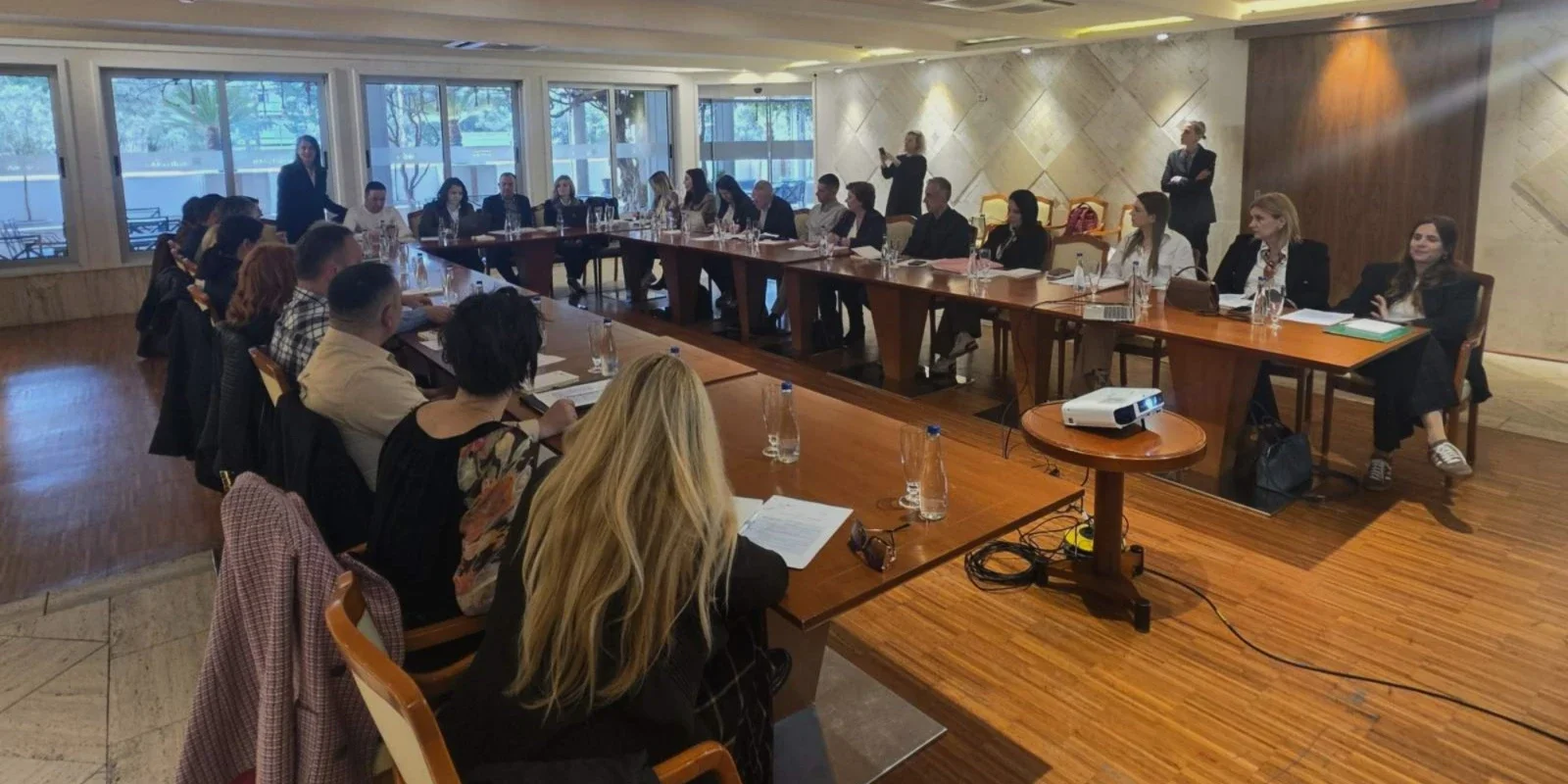
The Ministry of European Affairs, in cooperation with the Ministry of Public Administration, the Union of Municipalities of Montenegro and the project “Municipalities for the EU – Empowering Local Communities in Montenegro’s EU Integration Process”, organised a specialised thematic workshop for members of the Thematic Network for Digitalization, which was held in the period from 30 March to 1 April in Bečići.
The workshop brought together representatives of state institutions and local self-governments with the aim of improving cooperation and exchange of experience in the field of digital transformation, as well as strengthening capacities for the implementation of the legislative framework in this area.
During the two-day program, participants had the opportunity to become more closely acquainted with the key laws regulating the digitalization of public administration, including the Law on Electronic Government, the Law on Electronic Identification and Trust Services, the Law on Electronic Document, as well as the Law on Information Security. Special emphasis was placed on the practical application of regulations through group work and interactive discussions on the challenges faced by institutions in the process of digital transformation.
The opening remarks highlighted the importance of a coordinated approach to digitalization, as well as the need for continuous strengthening of public administration capacities, particularly at the local level. Relevant initiatives and programmes contributing to the improvement of digital services and the modernisation of public administration in Montenegro were also presented.
The workshop was also implemented within the activities of the strategic project “GOVERNANCE – Strengthening and Simplifying Processes for a Digital and Well-Governed South Adriatic”, which is financed through the Interreg IPA South Adriatic Program. Through this project, special focus is placed on improving the efficiency of public administrations through digitalization, simplification of procedures and strengthening the competencies of public servants, as well as preparation for the use of EU funds after membership.
By organising such activities, cooperation between institutions and local self-governments is further strengthened, while creating the basis for more efficient implementation of reforms and higher-quality provision of services to citizens.